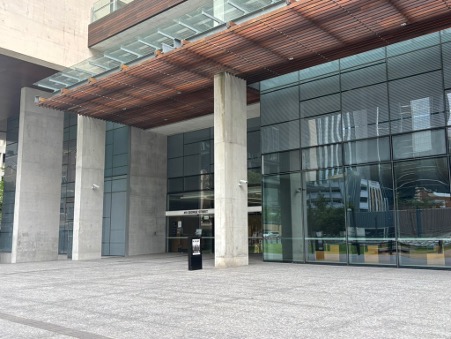
The Brisbane Supreme and District Court is undermining access to justice as the Queensland Government fails to provide beneficial education and aid to individuals seeking legal outcomes.
Individuals in Brisbane seeking legal proceedings are currently faced with three options: pay for legal representation, represent yourself, or apply for legal aid.
With barristers charging between $3000 and $5000 for a full day in the Brisbane Supreme and District Court, self-representing litigants are becoming more apparent.These individuals often seek self-representation due to experiencing barriers to justice through age, disabilities or language barriers.
An emerging gap is apparent with a “missing middle” who struggle to afford legal representation and fit within the selection criteria of legal aid schemes.
The Law Council of Australia defines the “missing middle” class broadly as older persons, individuals with disabilities, individuals within the LGBTQIA+ community or casual workers.
In Queensland, applicants for legal aid schemes must conform to strict means and legal merits testing to qualify for Government funded legal aid.
Shockingly, a report by the Productivity Commission on Access to Justice in 2014 states that only eight per cent of households were likely to meet these criteria.
As a last hope, the missing middle are put at an even larger disadvantage as the Queensland Government provides self-representing litigants with limited, yet convoluted, resources about court proceedings.
The Queensland Courts website provides a 54-page guide on explaining legal terms to self-representing litigants – but to an individual who is already grappling the mental and emotional costs of court proceedings, this may be overwhelming.
Nickolas Sofios, an associate at Fair Work Commission, commented that pushing legal jargon onto a demographic of individuals – who are already foreign to legal proceedings contributes to the gap even further.
“Jargon has its place, as with any discipline, because it can simplify things” stated Sofios. “But to the outside looking in where it makes things more complicated, it doesn't really serve anyone,” he said.
Upon appearing in court, the self-representing demographic faces subconscious presumptions by judges and solicitors.
Oliver Dickinson, a solicitor in a personal injury team at McInnes Wilson, noted that there is a subconscious presumption of incompetency of self-representing litigators within court - this attitude drives assumptions of impartiality within court.“We’ve dealt with a few that sort of think that they’re on top of things… but might not know exactly what’s happening in terms of the whole process,” stated Dickinson.
“You really only learn so much from reading and watching tutorials, There’s things that you struggle to learn without sort of experiencing practically,” said Dickson.
Interestingly, Chris Mizzen, a wholesale distributor from the Brisbane Produce Markets, faced another self-representing litigator in court in 2007.
Mizzen was taken to court after a supplier of his company was unsatisfied with the price he paid for “rotten produce”.
Mizzen claimed that his self-representation was influenced by the presumption that he would win his case entirely, which he did.
“The supplier had to pay for all legal fees, including ours,” stated Mizzen. “He didn’t do any research going in because he thought he would win,” said Mizzen.
Increasing educational resources and legal aid are clear contenders to solving this issue; but it goes without saying that each of those factors has a corresponding consequence for another “missing” demographic.
Sofios outlines that firms should consider offering third party litigation funding to proceedings for which they are not involved in.
This funding would involve providing pro bono legal advice and education to demographics like the missing middle who need valuable legal education to participate in court.
This new avenue preserves the democratic right of self-representing by increasing educational opportunities as well as lessening the stress of other parties who may have to verse unqualified litigants.